Kitchen & Bath
What Defines A Shaker Bathroom?
At its core, Shaker is about simplicity, utility, and proportion rather than ornament.
In a bathroom, the key move is framed cabinetry with recessed panels and very clean edges – straight, unfussy lines, square or very slightly bevelled profiles, never ogee or heavily routed.
Four Principles Guide Every Shaker Scheme:
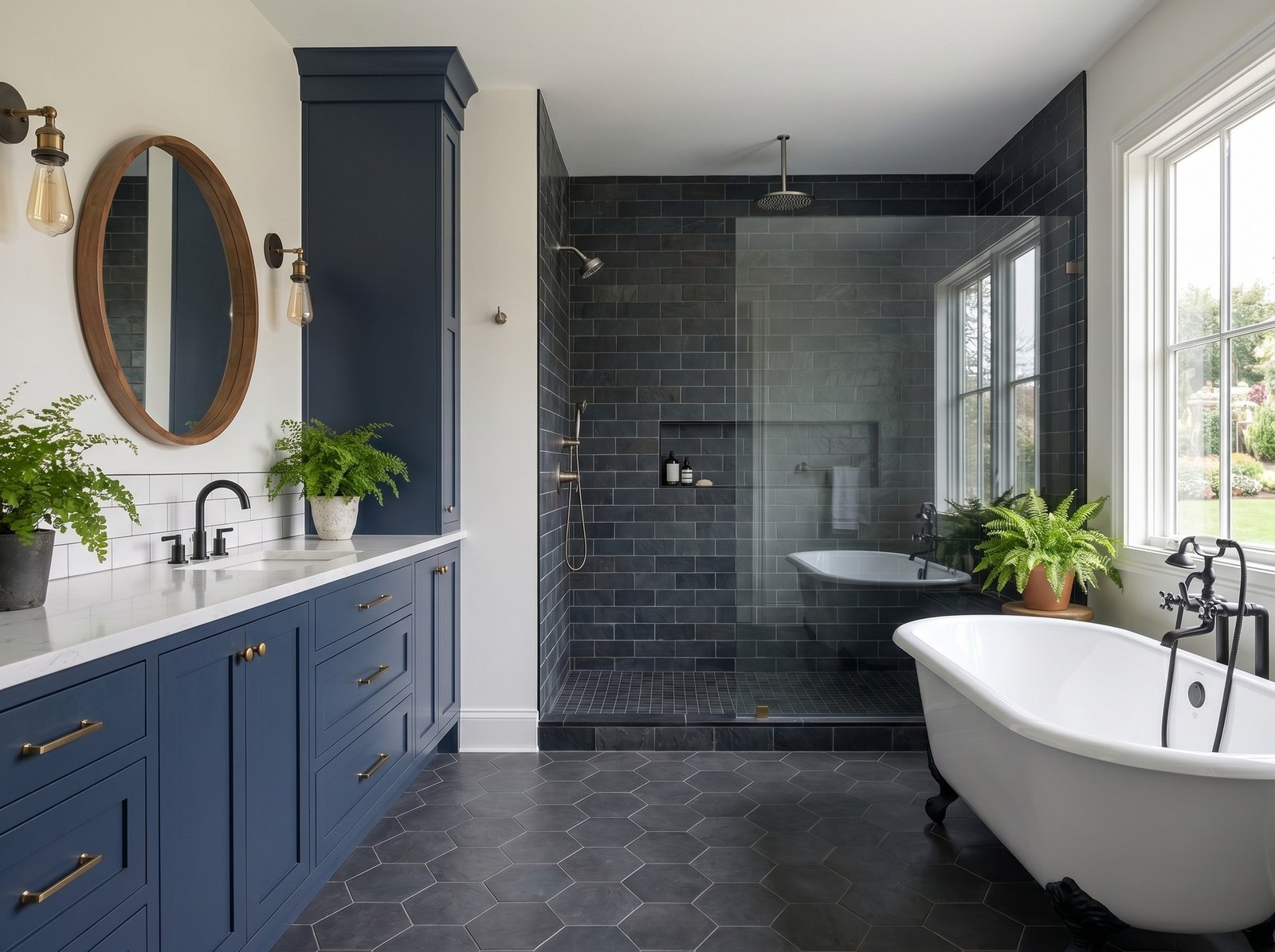
Flat, framed fronts. Vanity doors and tall storage in classic five-piece Shaker fronts, with drawers echoing the same language for consistency.
A quiet, functional aesthetic. Calm and uncluttered – minimal mouldings, no applied carvings, limited open shelving so the eye reads larger, simple planes.
Honest, durable construction. Solid timber frames, often with moisture-resistant MDF or ply panels for stability, and robust, tactile hardware rather than flimsy or ornate.
Timeless rather than trendy. It sits between traditional and modern classic, so it works in period homes and new-builds alike without ever looking "themed."
Layout
In a typical London or Home Counties footprint – often narrow, often a period shell – a Shaker layout earns its keep through calm planes and well-planned storage, so the room feels ordered rather than busy.
A Few Choices Carry The Look:
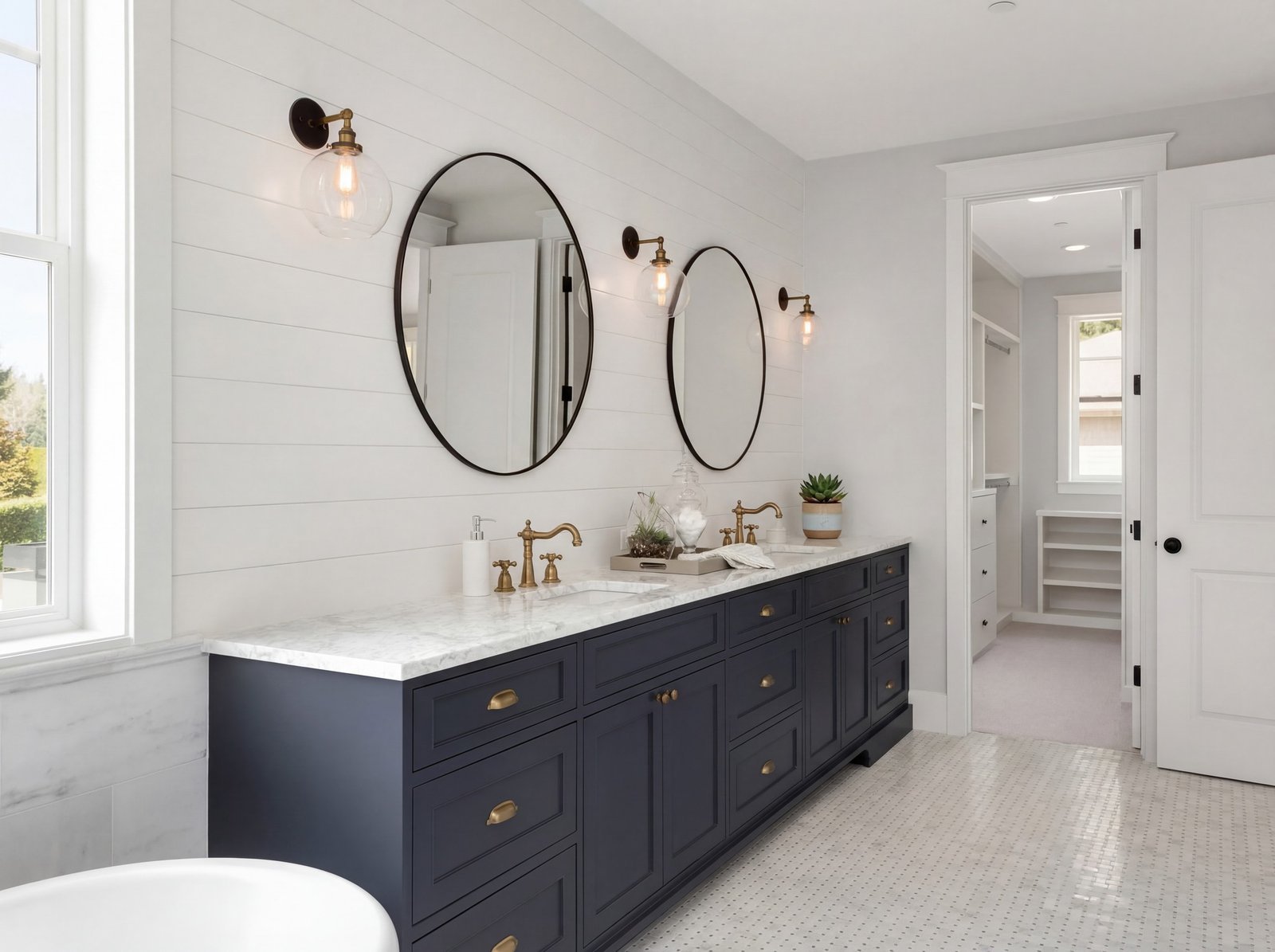
A framed Shaker vanity as the anchor – cupboards and drawers behind flat recessed fronts, set on a plinth or wall-hung.
A tall linen cupboard in the same language – full-height storage that keeps towels and supplies behind a calm, built-in face.
A walk-in shower with frameless glass or a simple period-style enclosure – clean and unfussy, in keeping with the restraint.
The guiding principle is enough closed storage that most things are hidden, with just a couple of open or peg-hung moments so the room feels lived-in but not cluttered.
Colour Palette
Shaker colour is deliberately restrained and slightly muted, so materials and form take the lead – which also helps manage low natural light in narrow bathrooms.
Soft whites and off-whites. Warm white, cream, and linen to keep a small, basement or north-facing room brighter and more open.
Greys and taupes. Light grey, putty, taupe, and mushroom, balancing beautifully with Carrara-style marble or terrazzo; mid greys for a townhouse feel with brass or chrome.
Nature-inspired deeper tones. Forest or olive green, navy, inky blue, or occasional charcoal on a vanity or feature wall – grounded by pale walls and floors so the room doesn't feel heavy.
Natural wood and soft stone. Oak, maple, or ash on vanity fronts, shelving or mirror frames, with warm greige and light sand tones in tiles and tops.
Steer away from very bright, high-chroma colour and extensive gloss metallic, which cut against the calm Shaker character.
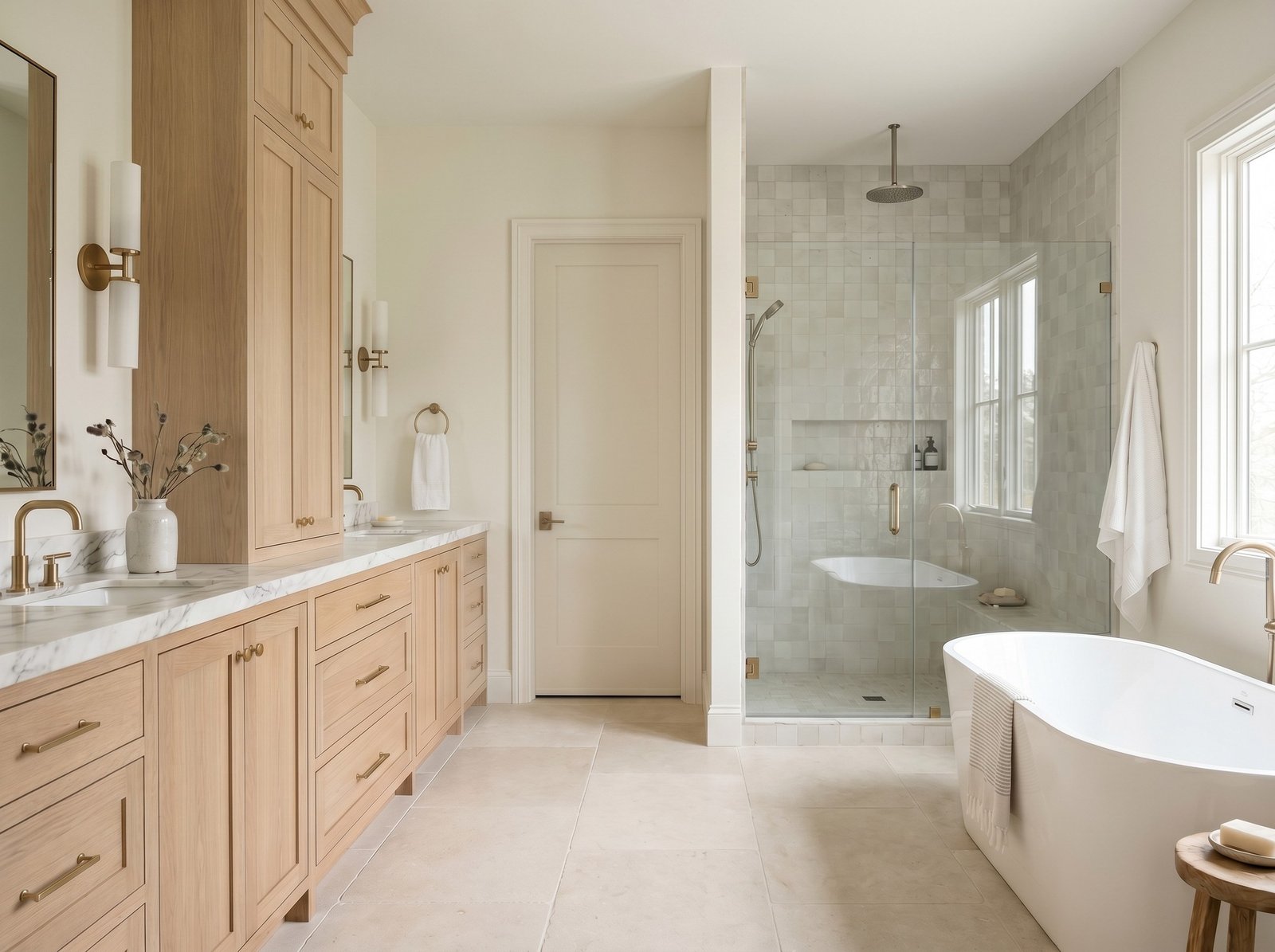
A Typical Palette:
Warm white walls, a light oak vanity, pale grey stone-effect tiles, and deep navy on a single cabinet for depth.
Materials
Shaker bathrooms lean into natural, tactile, durable materials that age well, with finishes that feel honest rather than plasticky.
Cabinetry and joinery. Solid hardwood frames (maple, cherry, oak) typically with moisture-resistant MDF or ply for recessed panels and carcasses, in spray- or hand-painted eggshell or satin (never high-gloss lacquer).
Tops and surfaces. Natural marble or limestone, or engineered quartz and porcelain in subtle patterns – engineered surfaces often chosen here for lower maintenance in hard water.
Ceramic and porcelain. Classic white ceramic basins, metro tiles, or large-format matt porcelain. Handmade-look tiles with slight variation for character without breaking the simplicity.
Metals and details. Brushed brass, antique brass, brushed nickel, or blackened metal – quieter than chrome but still robust; turned wooden knobs and peg rails nod to the history.
Balancing real natural materials (wood, stone) with practical analogues like stone-look porcelain gives the Shaker feel without the maintenance, which matters in a small, humid London bathroom.
Woven baskets, cotton towels, and simple linen support the honest, handcrafted feel.
Lighting
Shaker bathroom lighting is layered but visually calm – functional task light at the mirror, supportive general light, and optional soft accent – in simple forms that echo the style's restraint.
Ambient. Flush or semi-flush ceiling lights with understated shades in white, opal glass, or metal. A small, clean pendant centred in the room where ceiling height allows.
Task. Wall lights or sconces either side of (or above) the mirror with opal or frosted shades for diffuse, flattering light, in a finish matching the tapware and hardware.
Accent. Discreet LED beneath the vanity, in niches or under shelving for gentle evening light and wayfinding.
Fittings Should Echo Shaker Simplicity…
Rounded opal shades, simple cylinders or small domes, no crystal or ornate arms – and metalwork is usually brushed or aged rather than highly polished. Keep colour temperature warm-to-neutral, around 2700–3000K, to preserve the soft, natural atmosphere.
Storage
Shaker bathrooms excel at functional, well-planned storage that keeps surfaces clear and visual noise low.
Shaker vanity unit. Framed doors with recessed panels and a mix of cupboards and drawers, the drawers fitted with dividers or trays so everyday items have a place.
Tall linen cupboard. A full-height Shaker cupboard for towels, bulk supplies, and cleaning products, integrated within the vanity run or as a standalone tower.
Mirrored wall cabinet. Recessed or semi-recessed above the basin for eye-level storage with a flush, uncluttered profile.
Open and peg-hung moments. A few painted or timber open shelves, and a traditional Shaker peg rail for towels and robes, to soften the joinery without crowding the room.
The Guiding Principle:
Enough closed storage that most things are hidden, with just a couple of open or peg-hung moments so the room feels lived-in but calm.
Signature Hardware
Hardware is where you tune a Shaker bathroom toward period London, modern classic, or almost contemporary – without ever leaving the style.
Traditional References
Simple round wooden knobs, small turned pulls, and Shaker peg rails – lovely in more rustic or cottage-style homes.
Modern Classic
Small metal knobs, simple cup pulls or slim bar pulls in brushed brass, nickel or bronze, bridging traditional Shaker with contemporary living – substantial enough to feel solid, never oversized or flashy.
Brassware
Cross-head or lever taps with simple cylindrical or softly squared bodies, in brushed or satin brass, nickel, stainless, or black rather than ultra-shiny chrome.
Other Fittings
Hooks and rails as simple bars or pegs in the main metal finish, with robust hinges and door furniture in squared-off or gently rounded shapes rather than decorative backplates.
How We Deliver Shaker Bathrooms
A bathroom is the most trade-dense room in the house – plumbing, electrics, tiling, waterproofing, joinery, and decoration all stacked into a small space and a tight sequence.
Shaker raises the bar on the joinery in particular: the framed fronts, consistent reveals, and aligned hardware only read as crafted if they're executed precisely.
With us:
The same team designs and installs your bathroom, with one project manager from the first call to the final walkthrough.
Every trade is vetted and sequenced in the right order.
Pricing is agreed before work begins.
The design you envisioned is the one that gets delivered.